Abu Dhabi clean energy company Masdar has signed an agreement with Uzbekistan’s state power trader JSC Uzenergosotish to develop the Central Asian nation’s largest standalone battery energy storage system (BESS), marking a key step in Uzbekistan’s plan to expand renewable energy integration and grid reliability.
The 300 MW / 600 MWh Zarafshan BESS, located in the Navoiy region, will be capable of storing enough energy to power about 1.3 million homes for two hours once operational in the third quarter of 2028. The project forms the first phase of a broader national storage programme of up to 575 MW / 1.15 GWh agreed between Masdar and Uzbekistan’s Ministry of Energy last year.
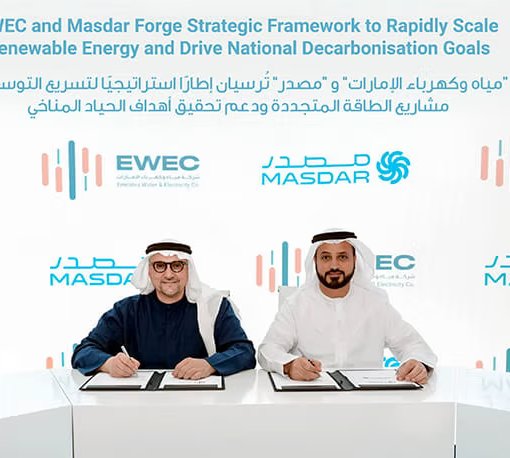
The Battery Storage Service Agreement was signed on the sidelines of the Abu Dhabi International Petroleum Exhibition and Conference (ADIPEC) by Masdar Chief Executive Mohamed Jameel Al Ramahi and Jahongir Obidjonov, chairman of JSC Uzenergosotish. The signing was witnessed by UAE Energy Minister Suhail Al Mazrouei and Uzbek Energy Minister Jurabek Mirzamahmudov.
Once completed, the system is expected to enhance grid flexibility and support Uzbekistan’s goal of generating 54 per cent of its power from renewable sources by 2030. The project will connect to the Murunau substation, with a second phase planned to double capacity to 600 MW / 1.2 GWh.
Al Mazrouei said the deal underscores the UAE’s growing clean-energy partnerships abroad and its alignment with global net-zero targets. “The Zarafshan Battery Energy Storage System will play a vital role in strengthening Uzbekistan’s grid resilience and expanding renewable integration,” he said.
Uzbek Energy Minister Mirzamahmudov said cooperation between the two nations had reached “a new level,” noting that Masdar’s existing portfolio in Uzbekistan already includes more than 1.7 GW of solar, wind, and storage capacity. “This new system will accelerate the integration of large-scale renewables into our grid,” he added.
Masdar’s Al Ramahi called the project “a significant milestone for Uzbekistan’s energy transformation” and said it demonstrates the UAE company’s growing expertise in utility-scale battery systems.
Masdar, officially known as Abu Dhabi Future Energy Company PJSC, has invested more than $2 billion in about 2 GW of clean-energy capacity in Uzbekistan and plans to double that figure in the coming years. The company aims to develop 100 GW of renewable capacity globally by 2030.